When people talk about carbohydrates, the conversation usually shrinks down to “eat less” or “avoid them.” But not all carbs behave the same way inside the body — and that’s where the glycemic index (GI) comes in: a tool that measures how quickly a food raises your blood sugar, compared to pure glucose.
What does the glycemic index actually measure?
The GI assigns every food a number from 0 to 100. High-GI foods (above 70) — like white bread, refined rice, or fries — raise blood sugar quickly and sharply. Low-GI foods (below 55) — like lentils, whole oats, or apples — raise it more gradually, giving your body more time to process it.
The glycemic index doesn’t tell you if a food is “good” or “bad” — it tells you how fast your blood sugar rises when you eat it on its own.
The trick is in the combinations
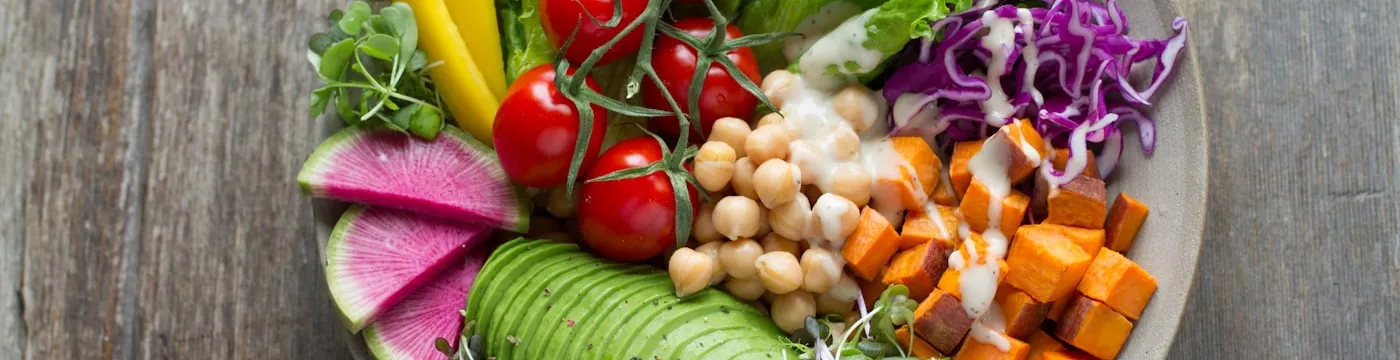
We rarely eat one food in isolation, and that’s the practical key: pairing a high-GI carb with protein, healthy fat, or fiber slows absorption and softens the glucose spike. White rice alone has a high GI, but served with chicken, vegetables, and a source of fat (like avocado or olive oil), the glycemic response of the whole meal drops considerably.
Other simple strategies: choose whole-grain versions when possible, avoid overcooking pasta or rice (the softer it gets, the higher the GI), and let potatoes or rice cool before eating them — the resistant starch that forms reduces their glycemic impact.
GI vs. glycemic load: the missing piece
The GI doesn’t account for how much you actually eat. That’s where glycemic load (GL) comes in, combining the GI with portion size. Watermelon, for example, has a high GI, but since it’s mostly water, a normal serving contributes few carbohydrates — its real glycemic load is low. So the GI is a useful general guide, but portion size is still part of the equation.
If you live with diabetes or prediabetes, you don’t need to memorize GI tables for every food. The principle is enough: prioritize combinations with fiber and protein, mind your portions, and let your personalized meal plan — not a table — be your daily guide.